The burden of proof just moved to you.
Under FedRAMP's new vulnerability rules, every finding is treated as exploitable by automation until you can show otherwise. Oligo observes what actually executes in your production environment, so you can distinguish real risk from theoretical risk.
Book a 20-minute walkthrough
What December 7 changes
CISA's BOD 26-04 told federal agencies to prioritize vulnerabilities by real risk. FedRAMP applied the same model to every cloud service it certifies, through two new rule sets: Vulnerability Detection and Response (VDR) and Vulnerability Evaluation and Reporting (VER).
Both become mandatory on Dec. 7, 2026, for any offering obtaining or maintaining certification.
In Practice, That Means
1
The monthly scan is retired. Evaluation runs continuously.
2
Exploitation is assumed to be automatable unless you hold evidence otherwise.
3
Internet reachability and likely exploitability set the remediation clock. CVSS becomes one input among several.
4
KEV-listed vulnerabilities follow BOD 26-04 timelines.
5
Mitigation counts while a fix moves through the pipeline, as long as you can show it happened.
Offerings that aren't following the rules by Dec. 7 move to a corrective action plan, with a grace period that ends Mar. 7, 2027.
Where Vulnerability Scanning Falls Short
Scanners are good at the job they were built for. They find every vulnerable package in an image, a repo, or a host, and that inventory still matters.
- The new rules ask about something a scanner never sees: what happens after the code ships.
- Is the vulnerable function ever called in production?
- Is that code path exposed to the internet?
- Is anyone trying to exploit it right now?
Reachability analysis narrows the list, but it's a prediction made from code. FedRAMP is asking what's true in production, every day.

Questions That Oligo Helps Answer
Which vulnerable code executes?
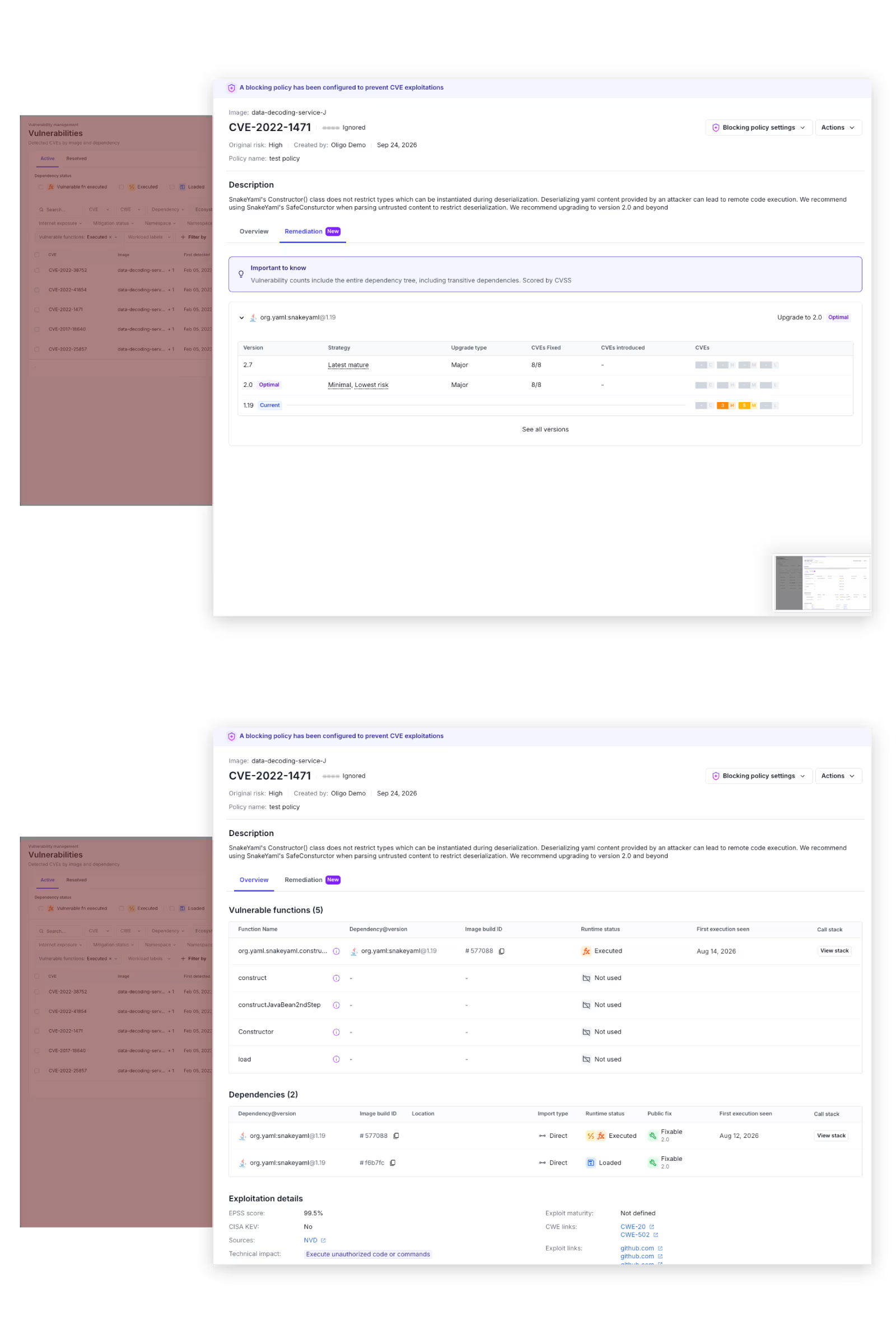
Oligo observes each running application at the function level and records which vulnerable functions load and run, per workload. A package that never executes gets evidence attached that says so. That's the evidence "assume automatable unless shown otherwise" calls for.
Which code is exposed?
Execution data is tied to the services that face the internet, so reachability comes from what's deployed today.
What stopped the exploit in the meantime?
Oligo blocks exploit attempts at the function being abused and applies virtual patches, without killing the container or restarting the app. Every block is logged, so "mitigated" becomes a record your 3PAO can read.
Why did each finding land where it did?
Runtime findings are enriched with CISA KEV and EPSS automatically. A real-time SBOM and automated VEX give you current, machine-readable reporting. How it works: one eBPF-based sensor observes applications at the function and sys call level. No source code access, no code changes, under 1% CPU. Deploys in under 4 hours.
The Compliance Work and the Security Work Are the Same Work
AppSec teams typically cut 90 to 99% of their CVE backlog within 48 hours, because most vulnerable packages never execute. Cresta cut its vulnerability count by more than 99%. SOC and IR teams get exploit detection at the function and sys call level, including zero-days, with the context to act: what ran, what it accessed, what the attacker touched. Cloud security teams see inside the running application, past the point where CNAPP and EDR findings stop, across containers, Kubernetes, serverless, and multi-cloud.
Leadership gets one runtime layer for protection, vulnerability management, and AI security, and a straight answer to the question agencies and boards keep asking: what is running in our environment, and is anyone attacking it right now?
The rules are catching up to how attackers already operate. Exploitation runs continuously and at scale, and AI is speeding up both the discovery of flaws and the writing of exploits. A remediation queue moves at pipeline speed. Something in front of it has to work in real time.
OLIGO Earns FedRAMP® Class D (High) Certification
Certified through Palantir’s FedStart program, Oligo lets federal agencies detect and block exploits in real time across applications, cloud workloads, and AI in production.
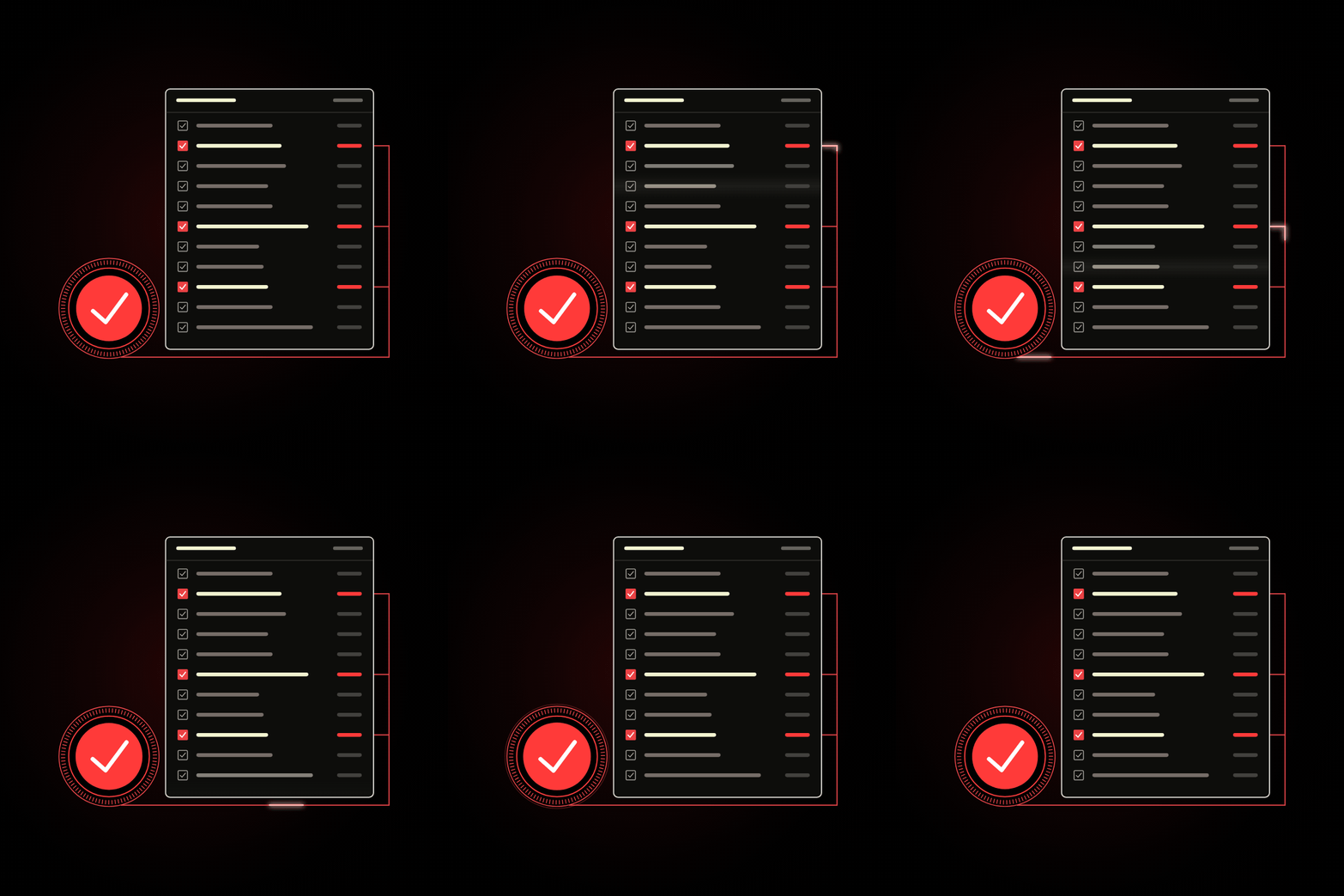
Readiness Check
Six questions, about three minutes. You'll get a score, the gaps an assessor is most likely to probe, and what closing each one takes.
FAQ
We're still In Process. Does this apply to us?
Does Oligo replace our scanner?
Will Oligo make us compliant?
How fast can we have evidence in place?
What happens if we miss the date?
Do AI workloads count?
Vulnerability rules take effect December 7. See which of your CVEs actually run in production.
See the runtime evidence for your own environment: what executes, what's exposed, what's been blocked.